
By Mackenzie Devilbiss
Some climate solutions are particularly potent because they are high impact and they can be implemented in the near future. Called ‘emergency brake’ solutions, these actions immediately curb emissions from highly damaging greenhouse gases such as methane. Emergency brake climate solutions include preventing ecosystem degradation, reducing methane emissions and leaks, and reducing food and energy waste. A few of these powerful climate solutions can be implemented at home, and one of them is already available to you as a resident of Santa Monica!
Green Bin Program and Food Waste
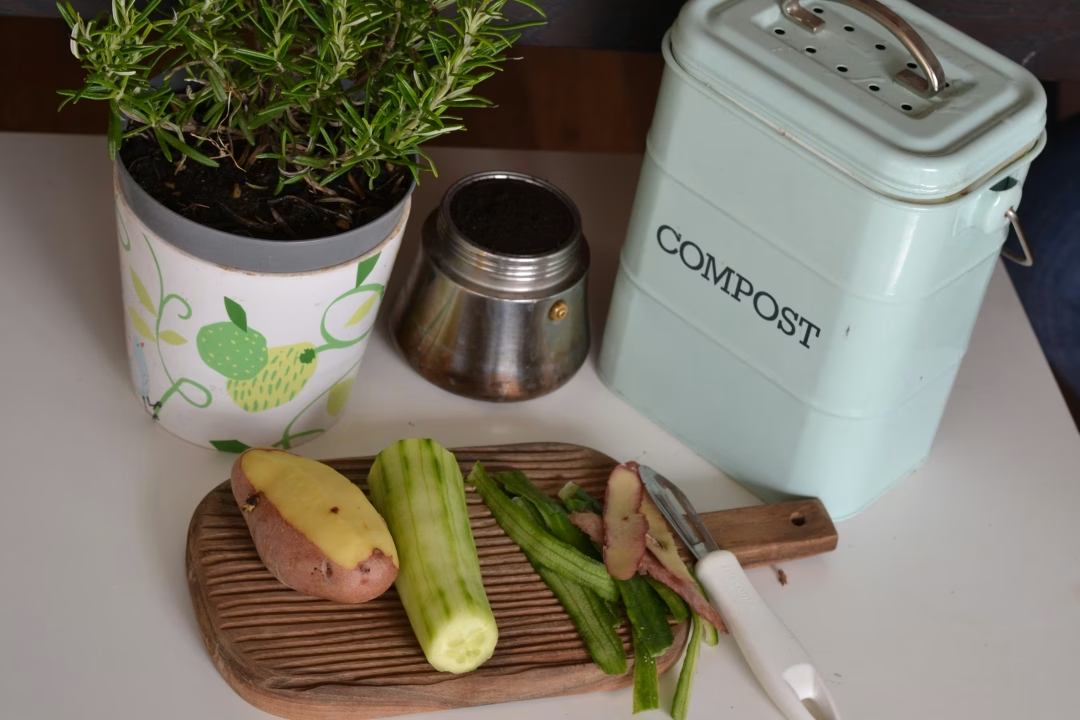
Two emergency brake climate solutions that go hand-in-hand are increasing the use of composting and reducing food loss and waste. When food waste and organic matter, like yard trimmings, are disposed of in a landfill, the organic waste decays and releases methane into the atmosphere. Methane is a potent greenhouse gas and has roughly 30 times the global warming potential of carbon dioxide. According to the US EPA, municipal solid waste (MSW) landfills are the third-largest anthropogenic source of methane emissions in the US. The agency estimates that 24% of the MSW disposed of in landfills is food waste – and this food waste is responsible for a staggering 58% of methane emissions caused by unintentional leaks from landfills. The final product of composting is a nutrient rich product that can be used for soil amending. This beneficial soil additive produces less potent emissions as a byproduct and has the potential to store carbon in the soil long-term.
In Santa Monica, the Green Bin program is available for all residents to separate organic waste from recyclables and landfill trash. The City of Santa Monica characterizes MSW into different categories and tracks how much of our MSW is food waste. In both 2023 and 2025, roughly 24% of Santa Monica’s MSW sent to landfill was food waste, matching the national average. The City also tracks how much waste is composted through the Green Bin program. Each resident in Santa Monica can support this powerful climate solution both by using the green bin in your home and by explaining the importance of the green bin program to your friends and neighbors. In addition, it is important to reduce the amount of food waste in your home by only buying what you need and planning meals in advance to prevent impulse food purchases. According to the US EPA: “One-third of all food in the United States goes uneaten. EPA estimates that in 2019, about 96 percent of households’ wasted food ended up in landfills, combustion facilities, or down the drain to the sewer system. The remainder was composted.” By maximizing use of the green bin program and reducing food waste in every home, we can each put on the emergency brakes to reduce climate-warming methane emissions.
Ballona Creek Wetlands
CASM has also taken action to preserve local natural landscapes by supporting closure of the operational oil and natural gas wells in Playa del Rey. The natural gas production and storage facilities in Playa del Rey have regularly reported large methane leaks, releasing methane directly into the air of the neighboring communities and the atmosphere. The area is classified as a ‘Level III methane hazard zone’, the highest methane hazard level recognized by the City of Los Angeles. CASM has taken a stance to support closure of the site. At the very least, SoCal Gas should plug all leakages as soon as possible to prevent further uncontrolled methane emissions. Gas leaks in the area can be reported to South Coast AQMD by calling 1-800-CUT-SMOG, and advocacy groups like Protect Playa Now have organized petitions on closing the site in the past. Being informed about the Playa del Rey natural gas facility and advocating for reduction of methane leaks is another opportunity for local emergency brake climate action!